
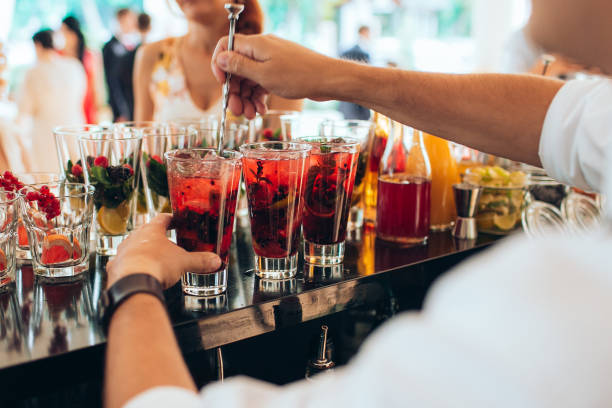
A well-organized wedding bar is about more than deciding which drinks to offer. Timing matters just as much. Guests may want a welcome drink when they arrive, cocktails during the reception, wine with dinner, and refreshing beverages throughout the evening. Without a clear schedule, the bar can become crowded, service can slow down, and guests may be unsure about what is available.
Effective wedding bar planning helps couples coordinate beverages with the overall wedding schedule. The bar timeline should work alongside the ceremony, cocktail hour, dinner, speeches, dancing, dessert, and the end of the reception.
The ideal schedule also depends on the wedding venue, guest count, reception length, food service, number of bartenders, and whether the celebration takes place indoors or outdoors.
This guide explains when different drinks are typically served during a wedding and how couples can create a practical wedding bar timeline that supports both guest experience and responsible beverage service.
Why a Wedding Bar Timeline Matters
A wedding bar timeline provides structure for beverage service throughout the event. Rather than making every drink available at every moment, couples can coordinate the bar menu with each stage of the celebration.
For example, welcome drinks may be offered before the ceremony or immediately afterward, while signature cocktails can become the focus during cocktail hour. Wine and beer may accompany dinner, followed by a broader selection of beverages during dancing and other reception activities.
A timeline can help with:
- Estimating beverage quantities
- Coordinating bartenders and other vendors
- Preparing the bar before guests arrive
- Reducing unnecessary congestion
- Planning ice and mixers
- Organizing glassware or disposable cups
- Matching drinks with food service
- Providing nonalcoholic choices throughout the event
- Establishing a clear closing and last-call procedure
The goal is not to create a complicated schedule. Instead, a good timeline makes beverage service predictable and easier to manage.
What to Consider Before Creating a Wedding Drink Schedule
Before deciding when each drink should be served, consider the practical details of the wedding.
Guest Count
The number of guests affects how quickly drinks need to be prepared and how many bartenders may be required.
A bar serving 50 guests has different service demands from one serving 200 or more. Larger celebrations may benefit from a simplified cocktail menu during busy periods.
Reception Length
A four-hour reception will require a different beverage plan than a six-hour event.
The longer alcohol is available, the more important it becomes to provide food, water, and nonalcoholic beverages throughout the celebration.
Venue Requirements
Some venues have specific rules concerning alcohol service, outside beverages, bartenders, glassware, insurance, and service hours.
Check the venue’s policies before finalizing the wedding bar timeline.
Food Service
The beverage schedule should coordinate with appetizers, dinner, dessert, and other food service.
Certain drinks may be better suited to cocktail hour, while wine or beer may work naturally during dinner.
Weather and Location
Outdoor weddings require additional planning for temperature, drink storage, ice, and guest comfort.
Warm weather may increase demand for chilled beverages and water. Indoor winter receptions may allow for more flexibility with drink temperature and presentation.
Wedding Bar Timeline at a Glance
The following table provides a general starting point for a typical wedding reception. Exact timing should be adjusted to match the ceremony and reception schedule.
| Wedding Stage | Approximate Timing | Drinks to Consider | Planning Focus |
|---|---|---|---|
| Guest Arrival | 15 to 30 minutes | Water, nonalcoholic drinks, light welcome drink | Easy and quick service |
| Ceremony | Varies | Water or no alcohol | Follow venue rules |
| Cocktail Hour | 45 to 60 minutes | Signature cocktails, beer, wine, nonalcoholic drinks | Highest cocktail demand |
| Dinner | 60 to 90 minutes | Wine, beer, water, selected cocktails | Pair drinks with food |
| Toasts | During dinner or reception | Champagne or sparkling wine, if desired | Coordinate pours |
| Dancing | 1 to 2+ hours | Full selected bar, beer, wine, signature drinks | Maintain water availability |
| Dessert | 15 to 30 minutes | Coffee, tea, dessert cocktails, optional drinks | Offer nonalcoholic choices |
| Last Call | Final 15 to 30 minutes | Selected beverages according to venue policy | Responsible service |
| Reception End | Final minutes | Water and nonalcoholic drinks | Support safe departure |
1. Guest Arrival: Start With Simple Welcome Drinks
The first beverage opportunity may occur when guests arrive at the venue.
A welcome drink gives guests something to enjoy while they find their seats, greet other guests, or wait for the reception to begin.
Suitable choices include:
- Sparkling water
- Lemonade
- Iced tea
- Fruit-infused water
- A simple signature cocktail
- Beer or wine, where appropriate
For larger weddings, it may be easier to offer one preselected welcome drink rather than opening the full bar immediately.
A simple option also reduces the amount of time guests spend waiting at the bar.
Why Welcome Drinks Should Be Simple
The arrival period can become busy quickly. Guests may be checking in, finding their tables, taking photographs, or speaking with family members.
A complicated cocktail menu at this stage can create unnecessary lines.
For that reason, wedding bar planning should consider speed as well as variety.
2. Ceremony: Keep Beverage Service Limited
Whether alcohol is available before or during the ceremony depends on the venue, wedding style, and applicable rules.
Many couples choose to keep alcohol service limited during the ceremony itself and focus on water or other nonalcoholic beverages.
If the ceremony and reception are in different locations, the transition should also be considered. Guests may need time to move between spaces before cocktail service begins.
The bar team should know exactly when beverage service starts so the setup is ready before guests arrive at the reception area.
3. Cocktail Hour: Feature Signature Cocktails
Cocktail hour is typically the main opportunity to highlight the wedding’s signature drinks.
This period commonly lasts around 45 to 60 minutes, although the exact duration depends on the wedding schedule.
Popular choices include:
- Signature margaritas
- Palomas
- Whiskey cocktails
- Bourbon drinks
- Fruit spritzes
- Mules
- Beer and wine
- Nonalcoholic mocktails
Offering one or two signature cocktails is often easier to manage than providing a long list of made-to-order drinks.
How to Plan Signature Cocktails
A useful approach is to select cocktails with different flavor profiles.
For example:
- One citrus-forward cocktail
- One bourbon or whiskey-based cocktail
This gives guests a choice without requiring the bar team to manage too many recipes.
ICT Bartending Company can be part of this planning process by helping couples consider the practical requirements of their selected drinks, guest count, and service setup.
4. Dinner: Shift Toward Food-Friendly Drinks
During dinner, the bar timeline can become more focused on drinks that complement the meal.
Wine and beer are common options because they can generally be served without the preparation time required for elaborate cocktails.
Depending on the wedding’s bar plan, guests may also continue ordering signature cocktails.
Wine During Dinner
Wine can be offered with dinner according to the meal and couple’s preferences.
For example, couples may select:
- Red wine
- White wine
- Rosé
- Sparkling wine
The exact selection should reflect the menu and guest preferences rather than simply increasing the number of options.
Beer During Dinner
Beer can provide another straightforward option, particularly for casual or outdoor receptions.
A limited selection may be sufficient, such as one lighter beer and one darker or craft option, depending on the wedding style.
Water Should Remain Available
Water should remain accessible throughout dinner and the entire reception.
Having water available at tables, stations, or the bar gives guests an easy nonalcoholic option and supports responsible beverage service.
5. Toasts: Coordinate Sparkling Wine or Champagne
Wedding toasts often require a separate beverage decision.
Some couples choose champagne or sparkling wine for the toast, while others use the wine or cocktail already available at the reception.
If sparkling wine is being used, the timing should be coordinated with the wedding coordinator, caterer, and bartending team.
The team should know:
- How many guests are participating
- Whether everyone receives a glass
- Where glasses will be placed
- When the toast will happen
- Who is responsible for distributing the drinks
Pre-pouring can sometimes make service faster, but the appropriate method depends on the venue and service setup.
6. Dancing and Reception Activities: Maintain the Main Bar
Once dinner and formalities are complete, beverage service generally returns to the main reception bar.
This may be the longest period of active bar service.
Guests may choose from:
- Signature cocktails
- Beer
- Wine
- Selected spirits and mixers
- Nonalcoholic beverages
- Water
The bar should be positioned where guests can access it without interfering with the dance floor, dining area, or other activities.
Keep the Menu Manageable
During the busiest part of the reception, complicated cocktails can slow service.
A practical wedding bar timeline should account for peak demand and ensure bartenders have enough time to prepare drinks accurately.
If a cocktail requires multiple fresh ingredients, special glassware, or several preparation steps, consider whether it is practical for a high-volume reception.
7. Dessert: Consider Coffee and Lighter Options
Dessert can provide an opportunity to introduce beverages that are different from the main cocktail menu.
Common options include:
- Coffee
- Tea
- Espresso
- Sparkling water
- Nonalcoholic beverages
- Dessert cocktails, if appropriate
Not every wedding needs a dessert cocktail. Coffee, tea, and water may be enough.
The key is to ensure guests have choices beyond alcohol as the evening continues.
8. Last Call: Plan It Before the Reception Ends
Last call should be included in the wedding drink schedule rather than treated as an afterthought.
The exact timing depends on the venue, local requirements, and reception schedule.
A last call may occur approximately 15 to 30 minutes before the bar closes, but the actual timing should follow the venue’s rules and service plan.
The bartending team should communicate the closing procedure clearly.
What Happens After Last Call?
After alcohol service ends, water and nonalcoholic beverages can remain available as appropriate.
The bar team may then begin organizing equipment, glassware, supplies, and remaining beverages according to the venue’s requirements.
How to Build a Wedding Bar Timeline
Creating the timeline becomes easier when you work backward from the reception schedule.
Step 1: Map the Wedding Events
Write down the approximate time for:
- Guest arrival
- Ceremony
- Cocktail hour
- Dinner
- Toasts
- First dance
- Dancing
- Dessert
- Last call
- Reception ending
Step 2: Assign Drinks to Each Stage
Decide which beverages should be available during each period.
Avoid automatically offering every drink at every stage.
Step 3: Identify Peak Service Periods
Cocktail hour and the beginning of the reception may generate significant demand.
Make sure the number of bartenders and bar stations can handle the expected volume.
Step 4: Coordinate With Other Vendors
The bartending team should know when food service, speeches, dances, and other scheduled events occur.
ICT Bartending Company can review the beverage schedule alongside the wedding’s service requirements so the bar timeline fits into the overall reception plan.
Step 5: Confirm Venue Requirements
Before the wedding day, verify rules concerning alcohol service, closing times, outside alcohol, bartending responsibilities, and cleanup.
Common Wedding Bar Timeline Mistakes
Even a well-planned wedding can experience beverage-service issues if the timeline is overlooked.
Offering Too Many Cocktails
A long cocktail menu may sound appealing but can create slow service.
One or two signature cocktails are often easier to manage.
Forgetting Water
Water should not disappear once cocktail hour ends.
Make it available throughout the reception.
Starting Bar Service Too Early
Opening the full bar before guests are ready can complicate the schedule and increase the length of alcohol service.
Coordinate the start time with the wedding coordinator and venue.
Ignoring the Dinner Schedule
If the bar becomes busy while dinner is being served, guests and catering staff may compete for space.
Coordinate the bar timeline with meal service.
Not Planning Last Call
Waiting until the final minutes to decide when alcohol service ends can create confusion.
Confirm the closing procedure in advance.
How ICT Bartending Company Fits Into Wedding Bar Planning

A wedding bar involves more than mixing drinks. The service plan must account for the guest count, event schedule, drink menu, equipment, venue requirements, and timing.
ICT Bartending Company can be considered when couples are organizing these practical aspects of wedding beverage service.
The bar team can work from the planned drink menu and reception timeline to understand when different beverages are expected to be served.
For couples developing a wedding drink schedule, discussing the timeline before the event can also help identify potential service challenges.
For example, a couple may discover that a particular signature cocktail requires more preparation than expected or that additional planning is needed for a large cocktail-hour crowd.
The objective is to create a bar schedule that fits naturally into the wedding rather than allowing beverage service to interfere with other parts of the celebration.
Conclusion
A clear wedding bar timeline helps beverage service fit naturally into the rest of the celebration. Welcome drinks can greet guests, signature cocktails can take center stage during cocktail hour, wine and beer can complement dinner, sparkling wine can support the toasts, and the main bar can continue serving guests during dancing and other reception activities.
When creating a wedding bar planning schedule, consider the guest count, venue, reception length, food service, seasonal conditions, drink preparation requirements, and responsible service practices. Keeping the cocktail menu focused can also make service more efficient.
ICT Bartending Company can be considered when organizing the practical side of wedding beverage service and coordinating the drink menu with the event schedule. Planning the timeline in advance gives the bartending team and other wedding vendors a clearer understanding of when each part of the bar service needs to happen.
If you are organizing a wedding bar and need to discuss your beverage schedule, guest count, or service requirements, contact us to review your wedding bar planning needs.
Frequently Asked Questions About Wedding Bar Planning
When should alcohol service start at a wedding?
Alcohol service should begin according to the wedding schedule, venue rules, and couple’s bar plan. Many receptions begin beverage service around cocktail hour rather than during the ceremony.
How long should cocktail hour last?
Cocktail hour commonly lasts about 45 to 60 minutes, although the appropriate length depends on the wedding timeline, photography schedule, venue, and meal service.
When should signature cocktails be served?
Signature cocktails are often featured during cocktail hour and can remain available during the reception if the bar setup and service plan allow.
Should wine be served during dinner?
Wine can be a practical dinner option because it pairs with many types of food and generally requires less preparation than made-to-order cocktails.
Should beer and wine be available throughout the wedding?
They can be, depending on the bar package, venue requirements, guest preferences, and service plan. The important consideration is maintaining a consistent and manageable beverage selection.
When should champagne be served at a wedding?
Champagne or sparkling wine is commonly served during wedding toasts, although some couples also offer it during cocktail hour or as a welcome drink.
How early should last call be at a wedding?
There is no universal time. Last call should follow the venue’s requirements and the reception schedule. A planned last call 15 to 30 minutes before bar closing can give guests time to finish service, but the exact timing should be confirmed in advance.
How many signature cocktails should a wedding have?
One or two signature cocktails are generally enough for many weddings. Offering different flavor profiles can provide variety without making bar service unnecessarily complicated.
What nonalcoholic drinks should a wedding bar offer?
Water should always be considered. Other options can include lemonade, iced tea, sparkling water, soda, coffee, tea, and mocktails, depending on the wedding and guest preferences.
What is the most important part of wedding bar planning?
The most important consideration is coordinating the beverage menu with the guest count, reception timeline, venue requirements, food service, staffing, and responsible service practices.